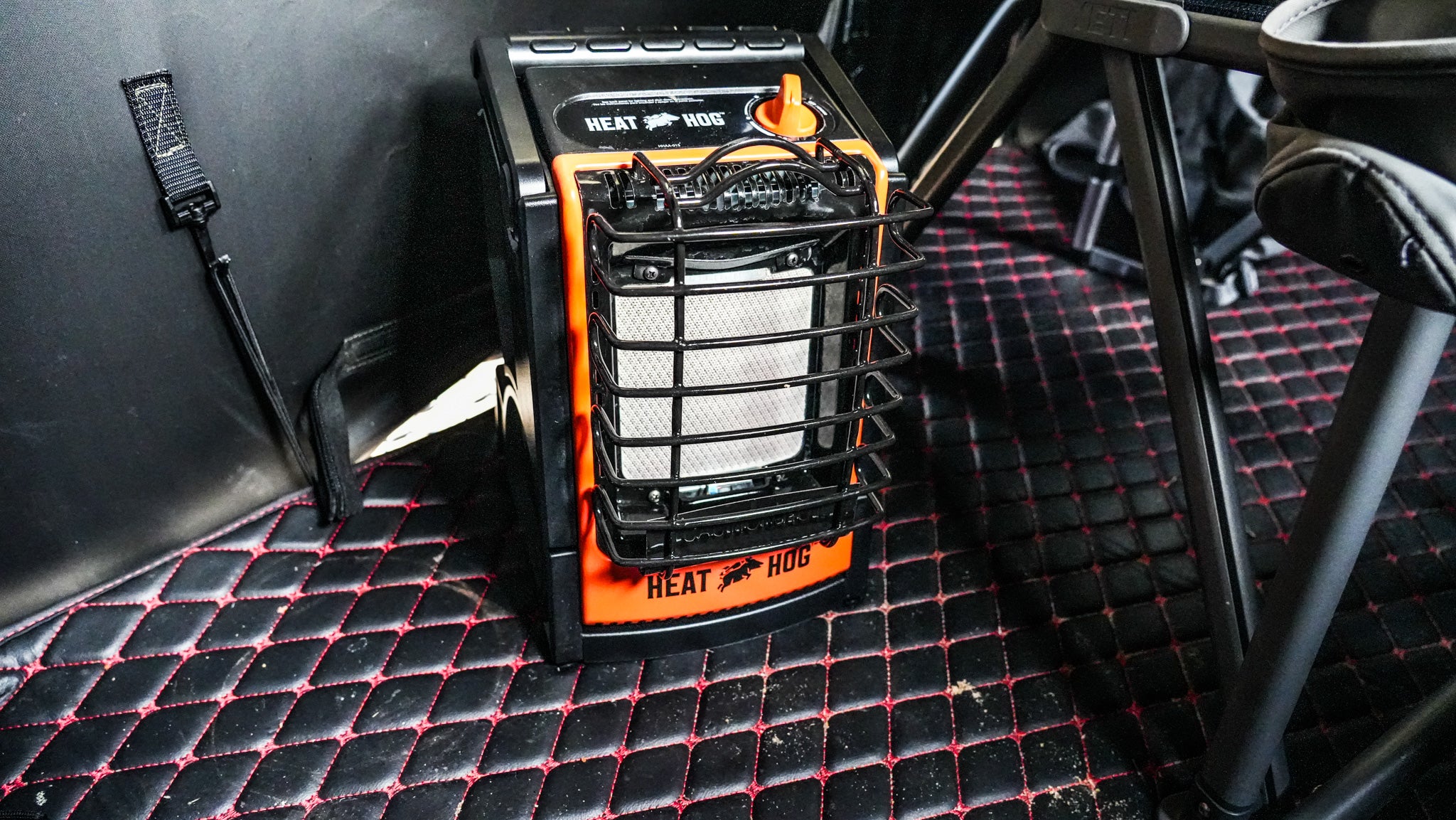

Two full Northern Michigan seasons later, it’s time for an sincere follow-up.
Once we first introduced the Warmth Hog 9,000 BTU and 18,000 BTU LP Moveable Heaters to our 640-acre lease, the advance over our previous buddy heaters was speedy. Sooner warmth. Higher construct. Smarter design. On the time, it felt like a transparent improve.
You’ll be able to learn our preliminary assessment under:
Now the actual query:
Do they nonetheless maintain up after two years of snow, mud, bouncing round in vans, being shoved into blinds earlier than daylight, and working for hours at a time?
Brief reply: sure.
Lengthy reply: here’s what modified, what didn’t, and what really issues after actual use.
Season One Was the Honeymoon. Season Two Was the Take a look at.
The primary yr, every thing works. That’s not as spectacular, it’s anticipated.
Season two is the place gear both proves itself or quietly will get changed.
Between late bow season, rifle season, and a brutal chilly snap that parked over Northern Michigan for what felt like a month, each heaters noticed actual runtime. The 9,000 BTU unit lived primarily in our elevated blinds. The 18,000 BTU heater continued to anchor “The Lounge,” our popup hangout tent linked to the principle camp tent the place we run Starlink, cost gear, and decompress at evening.
Neither unit has been babied.
They’ve ridden unfastened in truck beds.
They’ve been saved in chilly sheds.
They’ve been fired up in sub-freezing temps repeatedly.
They nonetheless ignite clear and burn regular.
Ignition and Reliability
That is the place low cost heaters begin displaying their age.
After two seasons:
- No ignition points
- No regulator issues
- No propane feed hiccups
- No noticeable drop in output
Each models nonetheless mild rapidly and run constantly. That sounds fundamental, however anybody who has fought a sputtering heater at 5:15 a.m. in single-digit temps is aware of that reliability is every thing.
The built-in propane storage design continues to be one of the crucial underrated options. Having the tank housed contained in the physique means fewer uncovered fittings and a extra secure footprint total.
Nothing rattles. Nothing feels unfastened.
That issues two years in.
Sturdiness Test
The metallic grill was one of many first issues I observed once we initially reviewed these. It felt heavier and extra substantial than competing heaters.

Two seasons later, that preliminary impression holds.
- Grill remains to be straight
- Housing has beauty scuffs however no cracks
- Knobs flip easily
- No warping from warmth
The end has held up surprisingly properly contemplating the abuse. We aren’t putting these gently into padded circumstances.
That is gear that lives like looking gear.
Efficiency After Actual Use
9,000 BTU Unit, Blind Workhorse
This heater has in all probability seen probably the most hours.
Inside a typical two- or three-man blind, it nonetheless:
- Takes the chilliness off rapidly
- Maintains regular heat
- Doesn’t really feel overpowering
The pivoting heating ingredient continues to be one in every of my favourite options. Two seasons later, I exploit it continually. Early morning, intention at ft. Noon, angle upward. No awkward tilting or unsafe positioning.

That flexibility sounds minor. It’s not.
It’s the distinction between tolerable and cozy.
18,000 BTU Unit, Camp Anchor
The 18,000 BTU mannequin stays the anchor for bigger areas.
We use it in:
- A popup lounge tent
- Gear staging areas
- Late-night soccer and story classes
It heats house rapidly and, extra importantly, retains it heat with out continually biking on and off.
Two seasons in, it nonetheless feels outsized in one of the simplest ways. In case you are heating something larger than a small blind, the additional output is noticeable and value it.
Having house for an additional propane tank constructed into the unit continues to be an enormous deal when you’re miles from city.
What Really Issues Two Years Later
Here’s what stands out most after dwelling with them:
- We by no means went again to our previous heaters.
- No one fights over who will get the great heater.
- They’re now assumed camp gear, not check gear.
That final one says every thing.

If one thing quietly turns into a part of the usual loadout, it handed the check.
Are There Downsides?
No piece of drugs is ideal.
They’re heavier than ultra-compact buddy-style heaters. That sturdier construct comes with added weight. For us, that tradeoff has been price it, however if you’re backpacking miles into public land, you’ll discover the distinction.
For truck-based looking, blinds, and camp setups, it’s a non-issue.
Would I Purchase Them Once more?
Two seasons later, completely.
The mixture of:
- Constant warmth output
- Sensible propane storage
- Adjustable heating ingredient
- Sturdy building
has confirmed itself over time.
Consolation within the blind shouldn’t be about luxurious. It’s about staying centered, staying longer, and making higher choices when the second comes.
When you find yourself heat, you don’t rush photographs.
When you find yourself heat, you don’t climb down early.
When you find yourself heat, you hunt higher.
Two Northern Michigan seasons later, the Warmth Hog 9,000 and 18,000 BTU heaters are nonetheless a part of our core camp equipment. That’s the highest praise I can provide any piece of looking gear.


No responses yet