Most campgrounds welcome dogs, but national parks limit where they can go, and every land manager expects them leashed and supervised.
Dogs make great camping companions, and many campgrounds are full of them. The rules depend on who manages the land, and the biggest difference is between national parks and everywhere else.
Where dogs can go
| Land | Dogs at campgrounds | Dogs on trails | Key rule |
|---|---|---|---|
| National parks | Generally yes | Usually no, with some exceptions | Leash no longer than 6 feet |
| National forests | Yes | Generally yes | Leashed in developed sites; local rules vary |
| BLM land | Yes | Generally yes | Local rules vary |
| State parks | Varies by state | Varies | Check the park |
National parks protect wildlife and fragile places, so pets are typically limited to roads, parking areas, campgrounds and some paved paths. Each park publishes a pet page showing exactly where dogs are welcome, and it’s worth reading before you book.
The National Park Service BARK rules
The Park Service sums up its pet guidance in four letters:
- Bag your pet’s waste and put it in the trash.
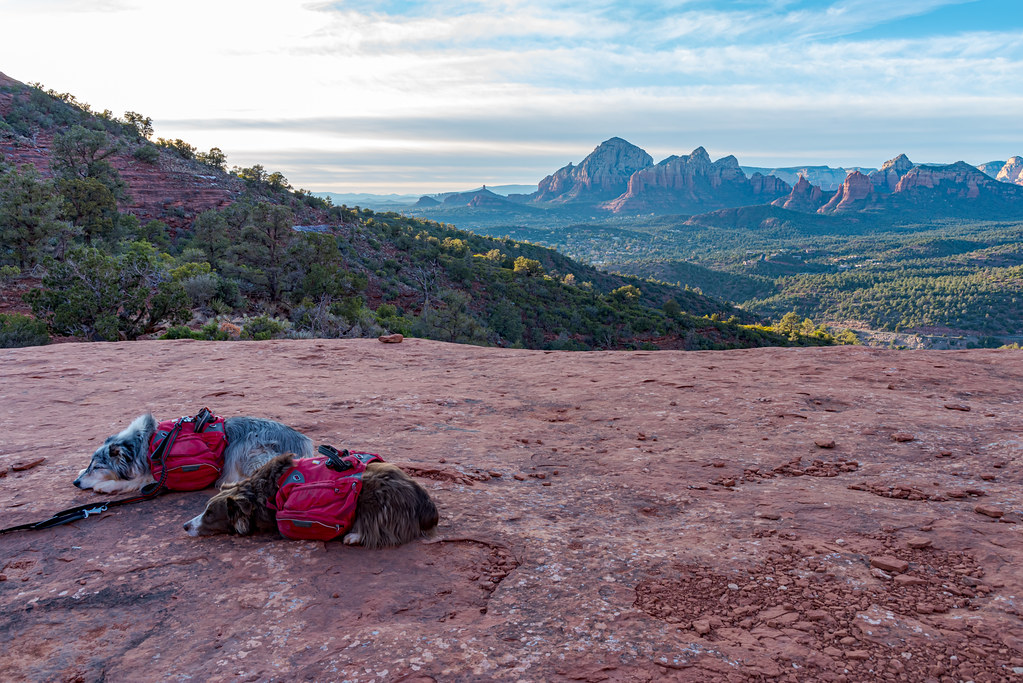
- Always leash your pet, on a leash no longer than six feet.
- Respect wildlife: don’t let your dog chase or bark at animals.
- Know where you can go.
At the campground
- Keep your dog leashed and within your site.
- Don’t leave your dog unattended, tied up at camp or shut in a car. Many campgrounds prohibit it, and heat builds fast inside a vehicle even on mild days.
- Mind quiet hours. Persistent barking is the most common complaint about dogs at campgrounds.
- Store dog food like people food. In bear country, kibble and bowls belong in the locker; see our guide to food storage in bear country.
- Pick up every time, and pack the bags out if there’s no trash can.
Heads up
Keep dogs away from water with green scum, foam or discolored patches. Toxins from harmful algae blooms can sicken or kill dogs that swim in or drink the water, and boiling doesn’t remove them.
Wildlife and dogs
A dog that runs off-leash can stress or provoke wildlife, from deer to moose and bears, and may lead an angry animal back to you. Keep your dog close, especially at dawn and dusk.
Health and paperwork
- Bring proof of rabies vaccination; some campgrounds ask for it.
- Use an ID tag and keep microchip details current.
- Ask your vet about flea and tick protection for the area you’re visiting.
- Pack plenty of water, and treat stream water for yourself as described in our guide to treating water at camp.
Before you book
Check the campground’s pet rules when you reserve. Some campgrounds limit the number of pets per site, and cabins often don’t allow them. Our guide to reserving campsites explains where to find those details.
Camp notes
- In national parks, pets must be on a leash no longer than six feet and are usually limited to campgrounds, roads and developed areas, not most trails.
- National forests and BLM land are generally more dog-friendly, but developed campgrounds still require leashes.
- Never leave a dog unattended at camp or in a car; heat and wildlife are real risks.
- Keep dogs out of water with algae blooms, which can be deadly to pets.
Questions campers ask
Can my dog go on national park trails?
Usually not, though a few parks allow pets on specific trails. Each park’s pet page lists exactly where pets are allowed.
Do service animals follow the same rules?
No. Trained service animals are allowed in more places under disability law. Pets and emotional support animals follow the park’s pet rules.
What is the BARK Ranger program?
A National Park Service program built around four rules: Bag your pet’s waste, Always leash your pet, Respect wildlife, and Know where you can go.
Rules, fire restrictions and closures differ by park, forest and district and can change quickly. Check with the land manager before your trip. This guide is general information, not professional safety advice.