A campfire is one of the best parts of camping and one of the commonest causes of wildfire. The rules change with the season, sometimes overnight.
The National Park Service estimates that nearly 85 percent of wildland fires in the United States are caused by people, and abandoned or poorly extinguished campfires are among the usual suspects. Following the rules isn’t just about avoiding a ticket. It’s how campgrounds and forests stay open.
Check the restrictions first
Fire restrictions are issued by the land manager, often together with state or county agencies, and they change with the weather. Check before you leave home and again when you arrive. Ranger stations, campground bulletin boards and agency websites post the current order.
Restrictions are commonly issued in stages. The wording varies by area, so treat this as a guide, not the rule itself.
| Level | Campfires | Stoves | Typical extras |
|---|---|---|---|
| No restrictions | Allowed with normal care | Allowed | Fireworks still banned on federal land |
| Stage 1 | Only in designated fire rings at developed campgrounds and sites | Usually allowed with an on-off valve | Smoking limited to vehicles, buildings or cleared areas |
| Stage 2 | Banned, including in campgrounds | Usually allowed with an on-off valve | Limits on chainsaws and other equipment |
| Closure | Area closed to entry | Not applicable | Leave the area |
Dispersed campers should pay special attention: Stage 1 often removes the right to a campfire anywhere outside a developed site. Our guide to dispersed camping explains who to contact.
Firewood: buy it where you burn it
Firewood can carry insects and diseases that kill trees, such as the emerald ash borer. Moving it from home to a campground a few hundred miles away is one of the main ways they spread. Some states, parks and campgrounds restrict bringing in outside firewood or accept only certified heat-treated wood.
- Buy firewood near your campsite, or bring certified heat-treated firewood where it’s accepted.
- Don’t take leftover firewood home or to your next campground.
- Gather wood only where it’s allowed. Many national parks prohibit it; many national forests allow dead and down wood. Never cut live trees.
Building a safe fire
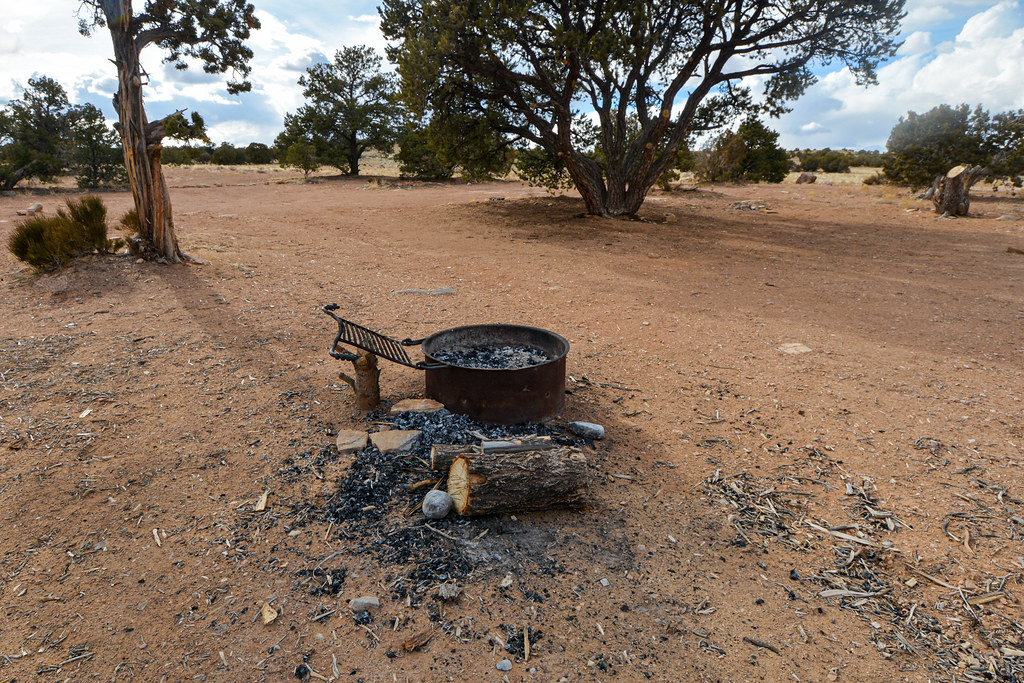
- Use the existing fire ring. Don’t build new rings.
- Keep the area around the ring clear of grass, needles and gear, and keep the tent well upwind.
- Keep fires small, and skip them in strong wind.
- Have water and a shovel at the ring before you light it.
- Don’t burn trash or food scraps. They leave residue and attract animals.
- Never leave the fire unattended, even for a few minutes.
Heads up
Never bring a fire, grill or stove into a tent or enclosed space to stay warm. Fuel-burning appliances produce carbon monoxide, which can kill in a closed shelter. Our guide to cold-weather camping covers safer ways to stay warm.
Putting it out: drown, stir, feel
- Drown the fire with plenty of water. Don’t just sprinkle it.
- Stir the ashes and embers with a shovel or stick, scraping partly burned wood.
- Drown it again.
- Feel for heat by holding the back of your hand near the ashes. If it’s too hot to touch, it’s too hot to leave.
If you don’t have enough water, use dirt or sand mixed in, not piled on top, and still check for heat. Burying a fire can let it smolder and escape later.
If a fire escapes
Leave immediately if a fire is spreading, and call 911 when you can. Don’t try to be a hero with a water bottle. People who start wildfires through negligence can be held liable for the cost of fighting them, which is one more reason the drown-stir-feel routine is worth the time.
For many campers, a stove is the simpler choice anyway, and it’s central to Leave No Trace in places where fires leave lasting scars.
Camp notes
- Check current fire restrictions with the park, ranger district or BLM office before every trip; they can change quickly in dry weather.
- Under typical Stage 1 restrictions, campfires are allowed only in designated rings at developed sites; Stage 2 usually bans them entirely.
- Buy firewood where you’ll burn it: moving firewood spreads tree-killing insects and diseases, and some areas restrict it.
- Put fires out with water, stir and repeat until everything is cool to the touch. Never leave a fire unattended.
Questions campers ask
Can I use my camp stove during a fire ban?
Often yes. Stage 1 and Stage 2 restrictions commonly still allow stoves and lanterns fueled by gas or propane with an on-off valve, but check the specific order for the area.
Are fireworks allowed on public land?
No. Fireworks are prohibited in national forests and national parks, regardless of fire danger.
Can I gather firewood at camp?
It depends. Many national parks prohibit gathering wood, while many national forests allow collecting dead and down wood. Never cut live trees, and check local rules.
What if I can’t get water to put out the fire?
Don’t light one. A fire you can’t fully put out with water shouldn’t be started.
Rules, fire restrictions and closures differ by park, forest and district and can change quickly. Check with the land manager before your trip. This guide is general information, not professional safety advice.