Ten minutes spent walking around before you unpack can decide whether you sleep well, stay dry and wake up without a branch on the tent.
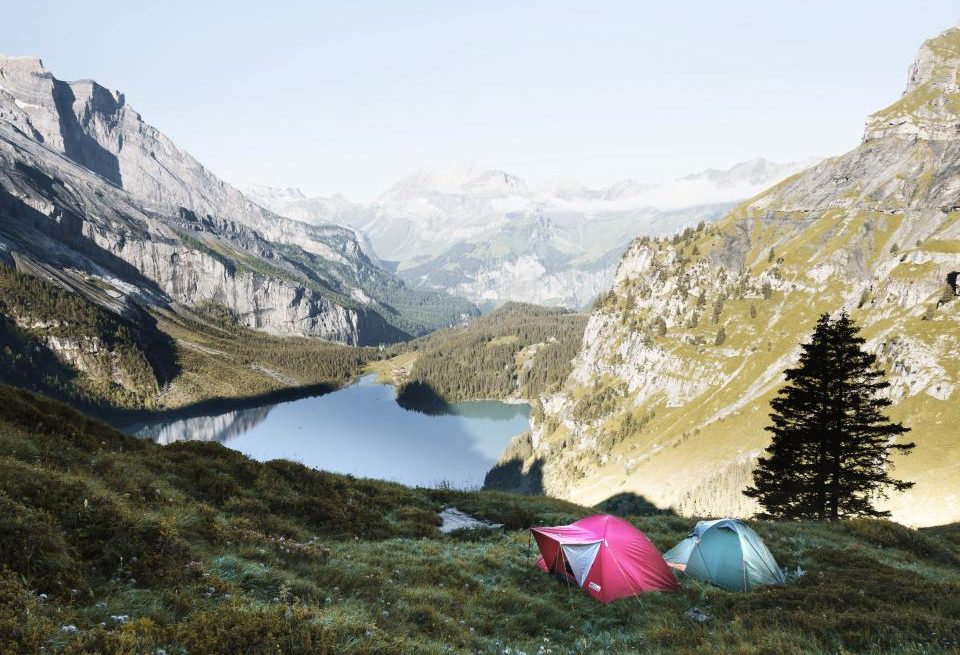
Campsite numbers tell you where you’re allowed to camp. They don’t tell you where to put the tent. Whether you’re in a developed campground or a dispersed spot on a forest road, a quick walk-around before you unpack is worth doing every time.
The five-minute walk-around
Before you unload, check these in order:
- Look up. Scan the trees above and around the spot for dead trunks, broken limbs and leaning snags. If anything looks loose, move.
- Look down. Find the flattest durable surface: a tent pad, gravel, bare compacted ground or rock. Avoid live plants you’d crush.
- Read the slope. Lie on the ground briefly if you’re unsure. Put your head uphill if there’s any slope at all.
- Check for water paths. Low spots, dry washes and gullies collect water in a storm. Look for debris lines and silt that show where water has run before.
- Notice the wind and sun. A windbreak of shrubs or a boulder helps. Morning sun dries dew off the tent; afternoon shade helps in summer.
Heads up
In canyon country and the desert Southwest, never camp in a dry wash or narrow canyon bottom. A thunderstorm miles away can send a flash flood through with little warning.
Distance from water
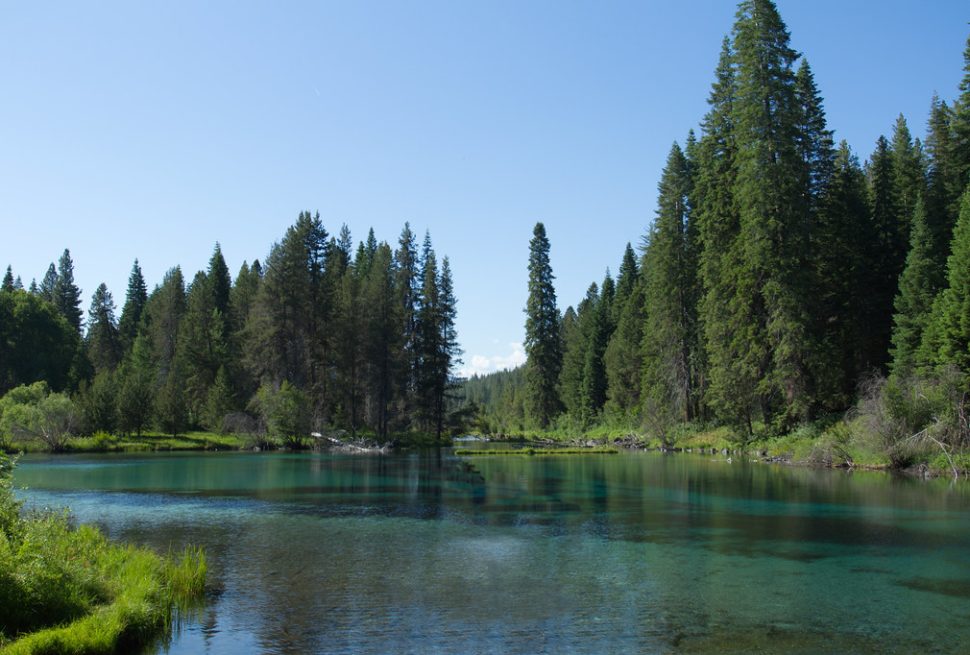
Inside a developed campground, the site layout handles this for you. Outside one, Leave No Trace recommends camping at least 200 feet, about 70 adult steps, from lakes and streams. That protects fragile shorelines and keeps you clear of wildlife coming to drink. Some forests and parks set their own distance rules, which take priority.
The same distance applies to washing dishes and to catholes. Our guide to Leave No Trace at camp covers waste and dishwater in more detail.
Laying out the site
Think of a campsite as three zones:
| Zone | Where | Why |
|---|---|---|
| Sleeping | Flattest, most sheltered spot | Comfort and safety |
| Kitchen | Downwind of the tent, on durable ground | Keeps smells and smoke away from where you sleep |
| Storage | Bear locker, vehicle or canister spot | Food and scented items away from the tent |
In bear country, the gap between kitchen and tent matters more. Many parks recommend cooking and storing food well away from where you sleep, and campgrounds often provide food lockers. Our guide to food storage in bear country explains the rules.
Pitching the tent
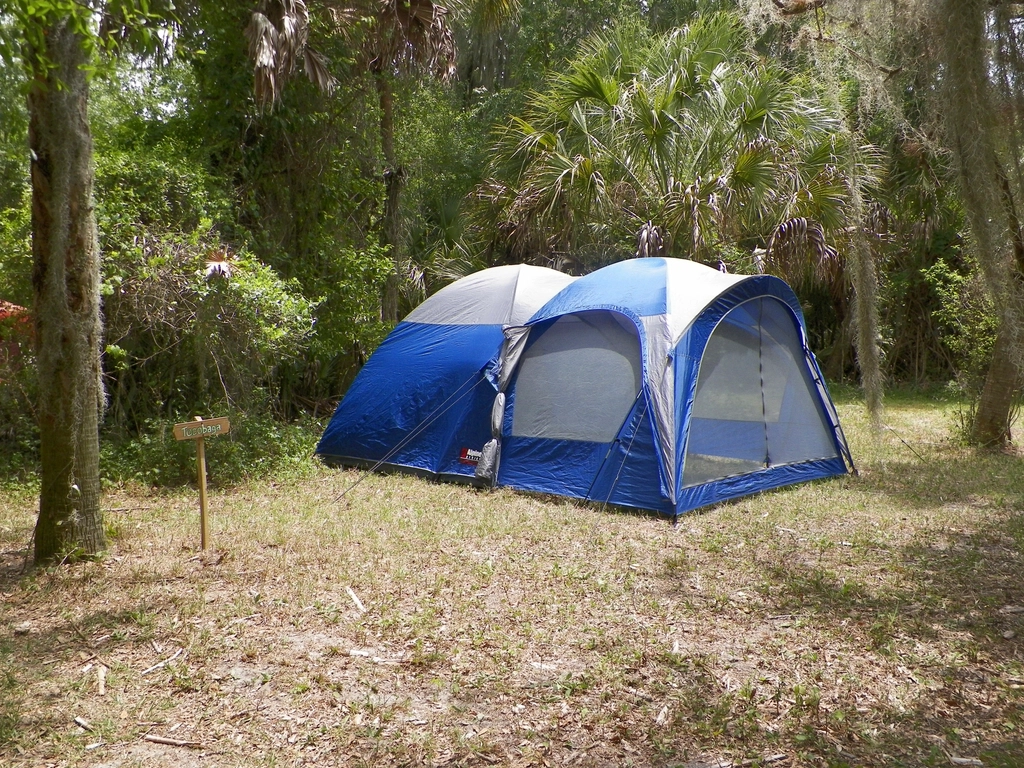
- Use a footprint or ground sheet slightly smaller than the tent floor, so rain doesn’t collect on it and run underneath.
- Stake out fully and tension the guylines, even on a calm evening. Weather changes overnight.
- Point the narrow end or the back of the tent into the wind.
- Keep the fly door zipped when you’re not using it to keep out insects and rain.
- Don’t trench. It damages the site and isn’t needed with a modern tent.
Fire and stove placement
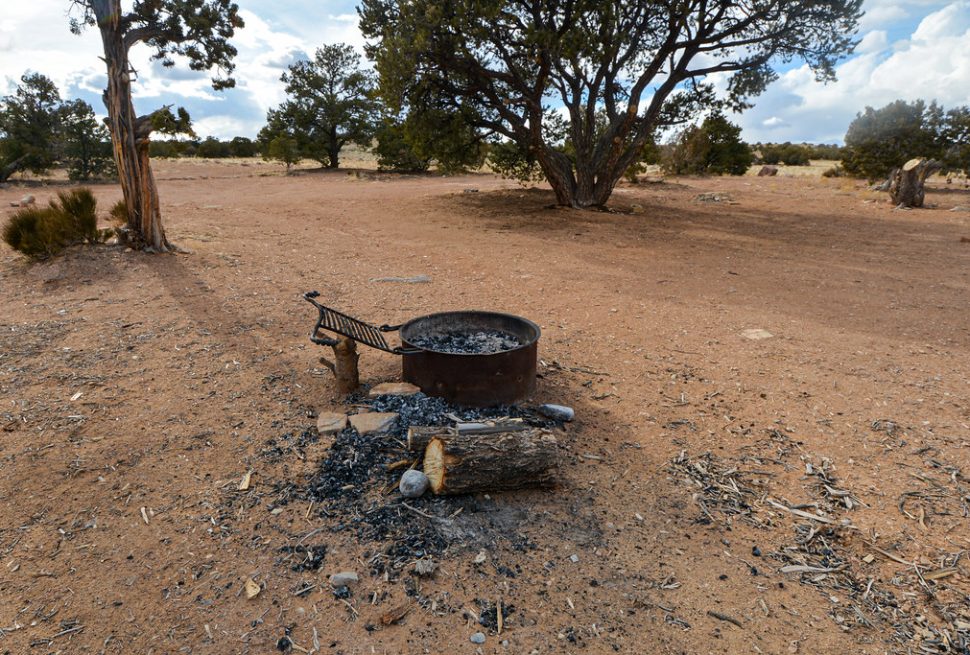
Use the existing fire ring and keep the tent well away from it, upwind of sparks. Never run a stove, heater or grill inside a tent or vestibule; fuel-burning appliances produce carbon monoxide. Before lighting any fire, check the current restrictions, which our campfire guide covers.
Before you leave
Walk the site one more time. Pick up microtrash, make sure the fire is cold to the touch, and leave it as you’d want to find it. Good campsites stay good because the people before you looked after them.
Camp notes
- Pitch on a durable surface that’s already been used, such as a tent pad, bare ground or gravel, rather than flattening vegetation.
- Look up before you pitch: dead trees and hanging branches cause serious injuries in campgrounds every year.
- Stay out of dry washes and low spots that can flood, and keep at least 200 feet from lakes and streams outside designated sites.
- Set up your kitchen downwind and away from the tent, especially in bear country.
Questions campers ask
What’s a widowmaker?
Campers’ slang for a dead tree or a broken branch hanging in the canopy that could fall in wind. Never pitch a tent beneath one.
Should the tent door face the wind?
Usually not. Facing the narrow end or the back of the tent into the wind keeps it steadier and stops the door from catching gusts.
Is it OK to dig a trench around the tent?
No. Trenching damages the site and isn’t needed with a modern tent. Choose higher, well-drained ground instead.
Rules, fire restrictions and closures differ by park, forest and district and can change quickly. Check with the land manager before your trip. This guide is general information, not professional safety advice.