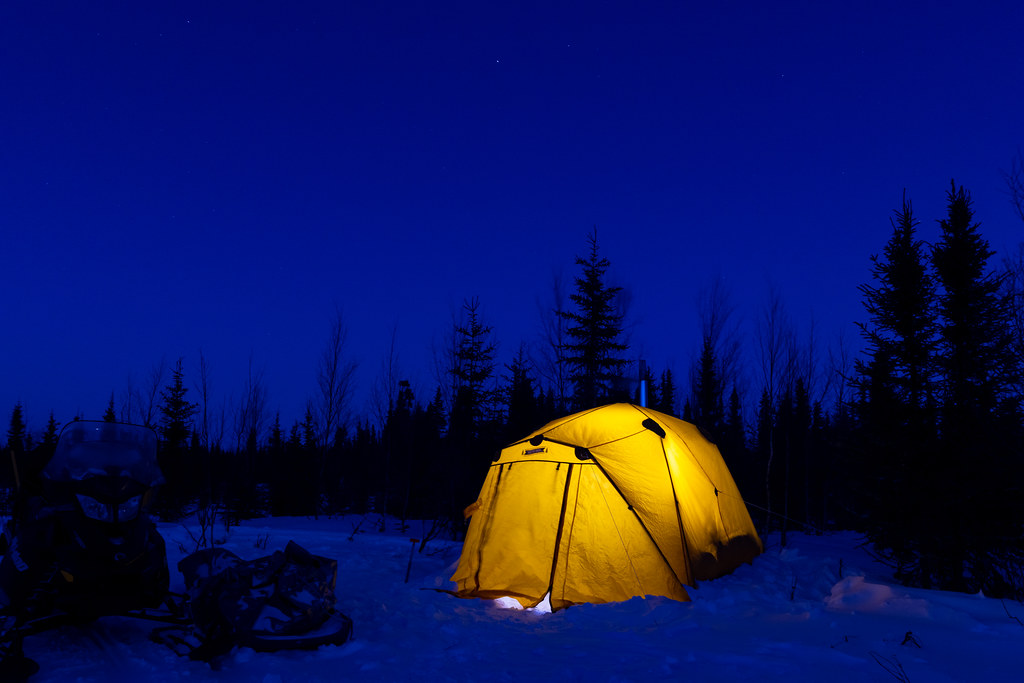
Cold-weather camping can be wonderfully quiet. It also leaves less room for mistakes, and the most dangerous one is trying to heat the tent.
Fewer crowds, no bugs, clear starry nights: cold-weather camping has a lot going for it. It also shrinks your margin for error. Here’s how to stay warm, and the one mistake that makes cold nights deadly.
First rule: no fuel-burning heat in the tent
Every winter, campers die from carbon monoxide after bringing a stove, heater, grill or charcoal into a tent, camper or vehicle to warm up. CO has no smell or color, and people who are asleep can be overcome before they notice anything.
- Never run a stove, heater, lantern or grill that burns fuel inside a tent or vestibule, even with a door open.
- Never bring a “cooling” charcoal grill or a bucket of embers inside.
- In an RV or camper, use a working CO alarm and keep generator exhaust away from windows and vents.
Symptoms of CO poisoning include headache, dizziness, weakness, nausea, chest pain and confusion. If anyone has them, get everyone into fresh air and call 911.
Insulation from below
Most of your heat loss on a cold night goes into the ground. A thick sleeping bag over a thin pad is a recipe for a sleepless night.
| What to check | What it means | Tip |
|---|---|---|
| Pad R-value | How well the pad blocks cold from the ground; higher is warmer | Stack a foam pad under an inflatable one in deep cold |
| Bag comfort rating | Temperature at which a typical sleeper stays comfortable | Choose one at or below the night’s expected low |
| Bag lower limit | Closer to the edge of safety than to comfort | Don’t plan around it |
Layers that work
- Base layer: wool or synthetic, next to the skin. Avoid cotton, which holds moisture and stops insulating when wet.
- Insulating layer: fleece or a puffy jacket for camp.
- Shell: wind and waterproof outer layer.
- Extras: warm hat, dry socks for sleeping, gloves you can work in.
Change into dry clothes before bed. Damp base layers from the day’s hike will chill you all night.
Camp tip
Fill a sturdy water bottle with hot water, close it tightly, and put it in a sock at the foot of your sleeping bag. It’s simple, safe heat.
Food, water and gear
- Eat a solid dinner and keep a snack nearby. Your body needs fuel to make heat.
- Keep drinking. Cold air dries you out, and dehydration makes you feel colder.
- Protect your filter. Freezing can damage many hollow-fiber water filters. Keep it in your sleeping bag overnight, or boil water instead. Our guide to treating water at camp compares the methods.
- Keep batteries warm in an inside pocket; cold drains them quickly.
- Plan for the dark. Winter days are short, so set up camp well before sunset.
Know the signs of hypothermia
The CDC lists these warning signs in adults:
- shivering
- exhaustion or feeling very tired
- confusion
- fumbling hands
- memory loss
- slurred speech
- drowsiness
If someone shows them, get them out of wet clothes, into dry layers and a sleeping bag, and give warm, sweet drinks if they’re alert. A body temperature below 95°F is an emergency: get medical help.
Watch for frostbite too, which often starts with redness or pain and can progress to numb, white or grayish skin that feels firm or waxy.
Check before you go
Many campgrounds close for the season or turn off their water, and forest roads may be gated or snowed in. Check with the park or ranger district, and look at the forecast for wind and storms. Our guide to storm safety at camp covers what to do when the weather turns.
Camp notes
- Never use a stove, heater, grill or lantern that burns fuel inside a tent, camper or vehicle; carbon monoxide can kill sleeping campers before they notice symptoms.
- Insulation from the ground matters as much as your sleeping bag: check the pad’s R-value as well as the bag’s comfort rating.
- Dress in layers you can adjust, and avoid cotton, which loses its insulation when wet.
- Shivering, confusion, fumbling hands, slurred speech and drowsiness are warning signs of hypothermia that need action right away.
Questions campers ask
Are ‘indoor-safe’ propane heaters OK in a tent?
Federal safety agencies warn against using fuel-burning appliances in tents and other enclosed spaces. A tent isn’t a ventilated room, and carbon monoxide builds up fast. Use better insulation instead.
What does a sleeping bag temperature rating mean?
Standardized bags list a comfort rating and a lower limit rating. The comfort rating is the better guide for most sleepers; the limit is closer to survival than comfort.
Why is my tent wet inside on a dry night?
That’s condensation from your breath and body. Open the vents, keep the door slightly cracked if you can, and don’t cook inside.
Rules, fire restrictions and closures differ by park, forest and district and can change quickly. Check with the land manager before your trip. This guide is general information, not professional safety advice.